
Stockview
Stockview helps industrial organisations plan maintenance supply chains efficiently. It analyses historical consumption and operational context to anticipate which items will be needed, when shortages may occur and what to prioritise.
Consumption Prediction & Inventory Planning
Inventory Consumption Prediction
AI-based predictive analysis applied to historical consumption data
Planning-ready output
Clear priority lists, time horizons and confidence indicators
Scenario planning
To test "what if" situations (lead times, usage changes, operational tempo)
Dashboards and reporting
For planners and decision-makers
Flexible deployment
Cloud, on-premise or edge to match security and operational constraints
Value delivered
Typical outcomes
- 01
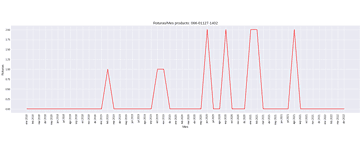
Stockout reduction
- 02
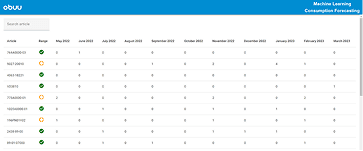
Faster, more consistent planning decisions, supported by clear evidence and prioritisation
- 03
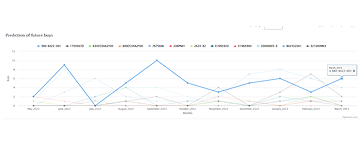
AI-based predictive analysis
How does it work?
Align on objectives and scope
Define availability objectives, shortage risk tolerance and planning cadence, and select the initial scope, such as warehouse, fleet or parts families.
Connect and prepare the data
Bring together consumption history, current stock, lead times and key operational drivers; clean, harmonise and validate to ensure consistency.
Generate forecasts and priority lists
Produce planning-ready outputs: expected needs, potential shortages, and a ranked list of items to prioritise.
Validate with planners and refine
Review results with planning teams, adjust assumptions and thresholds, and confirm the outputs fit real decision workflows.
Sectors and environments
Stockview is designed for availability-critical organisations (aerospace/defence, railway, energy, industrial manufacturing and process industries). It integrates with existing planning and supply-chain systems and can be deployed in cloud or on-premise depending on security, connectivity and latency constraints.