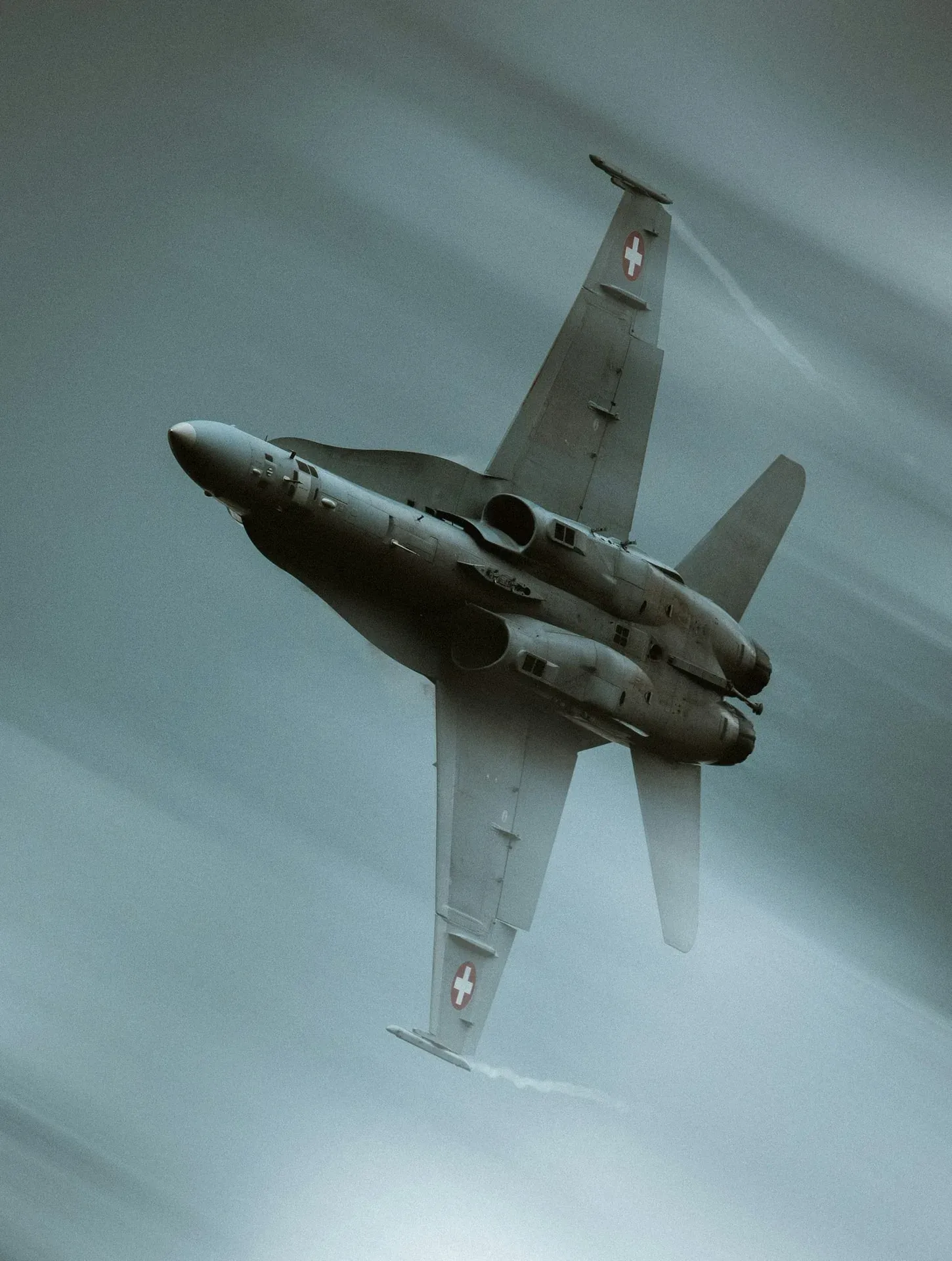
Multiphysics Simulation
Advanced Multiphysics Simulations FEM & CFD for Critical Systems and Equipment in aerospace, nuclear, railway and renewables.
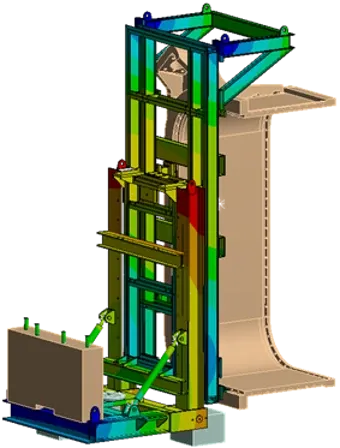
One of the strongest values that OBUU TECH brings to the market is its full capability in Multiphysics numerical simulations to ensure the optimal performance of systems under extreme conditions.
By integrating multiple physical fields, such as structural mechanics, thermal analysis, fluid dynamics, and vibration behavior, we create detailed models that predict how systems will behave in real-world scenarios. This approach is essential for validating the design and functionality of complex systems and equipment used in aerospace, defence, nuclear, and space missions, providing:
Predictive Performance
Identify potential issues before physical testing, reducing risks and costs.
Optimized Design
Improve efficiency and performance by fine-tuning materials, geometries, and components.
Reliability
Ensure the safety and reliability of systems under extreme conditions, meeting or exceeding industry standards.
Qualifications
Structural and environmental qualification by analysis, like transport, thermal behavior, safety and operational loads
Our multiphysics simulation capabilities are powered by industry-leading software such as ANSYS Mechanical and Siemens SIMCENTER3D and our ability to use other platforms if required, enabling us to perform high-precision analysis for a wide range of applications. Whether designing flight equipment for military aircraft, ground equipment for space missions, or critical components for nuclear reactors, our simulations ensure that every system is rigorously tested and optimized for performance, safety, and reliability.
This technique provides a comprehensive analysis of the equipment or system's structural integrity, evaluating its ability to withstand the operational loads, temperatures, and environmental conditions it will encounter. And all of that we document it in a report with steps, results and methodologies used to ensure that each component and assembly meets or exceeds the required safety and durability standards.
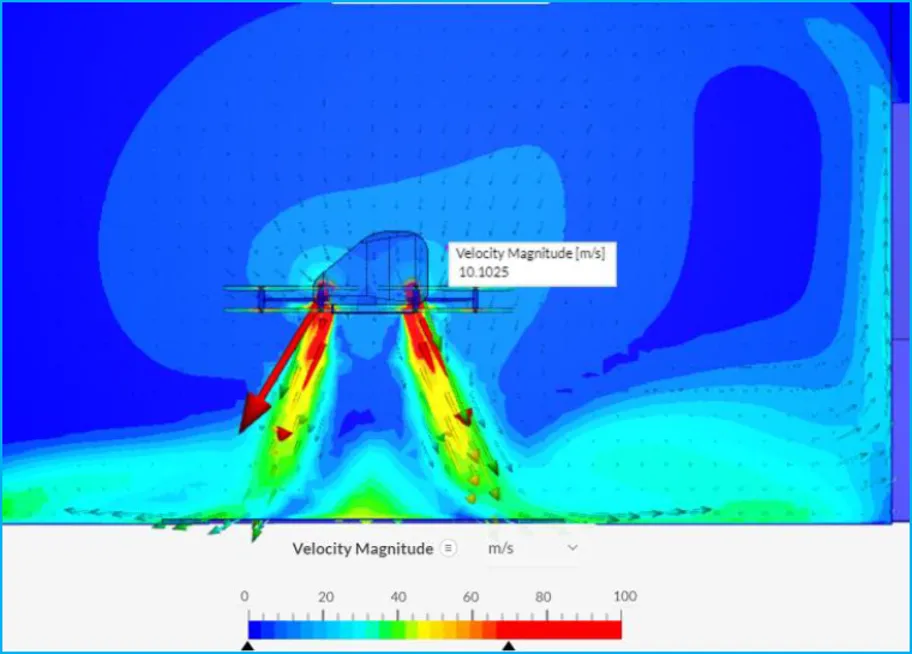
The structural analysis follow a phased approach, starting with preliminary calculations during the initial design phase and advancing through intermediate and final analyses. Each phase aims to validate the system's structural compliance with the specified requirements, focusing on key factors such as mass distribution, material selection, modal failure, vibrations and thermal performance.
As for load cases, at OBUU TECH we master the following analysis techniques:
| Type of analysis | Know-how | Sector of experience |
|---|---|---|
| Structural | Yes | Aero, Nuclear, Railway, Defence |
| Modal | Yes | Aero, Nuclear, Railway, Defence |
| Response spectrum | Yes | Aero, Nuclear, Railway, Defence |
| Couple field harmonics | Yes | Space |
| CFD steady state | Yes | Railway, Nuclear |
| CFD transient | Yes | Railway, Nuclear |
| Energy equation | Yes | Railway, Nuclear |
| Viscous forces | Yes | Railway, Nuclear |
| Electromag low | Yes | Academic |
| Electromag high | Yes | Academic |
| Piezoelectric | Yes | Space |
Analysis Workflow
To ensure accurate and reliable results, the following steps will be followed in each phase of analysis
Requirements analysis
Review all structural, thermal, safety and load requirements for compliance.
Material definition
Select materials and characterize their mechanical and thermal properties.
Geometry preparation
Prepare the geometry for FEA by simplifying where necessary, correcting any interferences, and guiding mesh generation.
Contact and mesh generation
Define contact points between parts and create an optimized mesh for accurate analysis.
Simulation setup
Configure the simulation, including boundary conditions, gravity forces, applied loads, and any relevant thermal conditions.
Results review
Review outcomes to verify compliance with requirements for structural and thermal integrity.
Report Content
The Structural Report will document all analyses, combining both FEA and analytical methods (if any). It will include
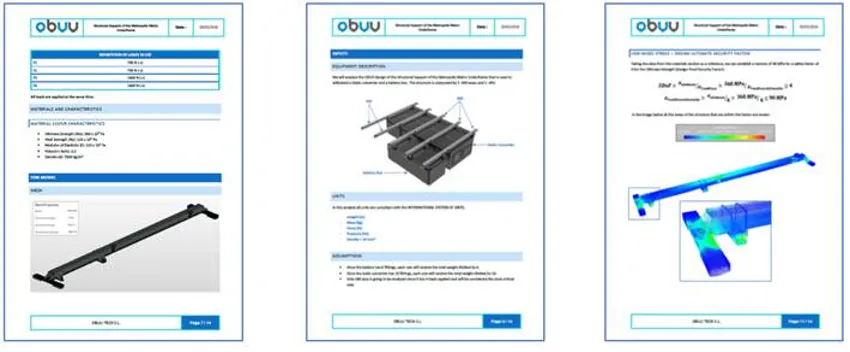
Purpose of study
Description of the objectives and scope of the report.
Reference documents
List of applicable technical specifications and standards.
Equipment description
Overview of the brake system and its components.
Units and material characteristics
Consistent units and detailed material properties.
Load cases and assumptions
Documentation of all load cases, thermal conditions, and assumptions made.
FEM model description
Details on mesh characteristics, boundary conditions, and any adjustments to the FEM model.
Requirements and results
Explanation of compliance with structural and thermal requirements and analysis results.
Conclusions and recommendations
Summary of findings and design recommendations to ensure structural integrity and thermal stability.
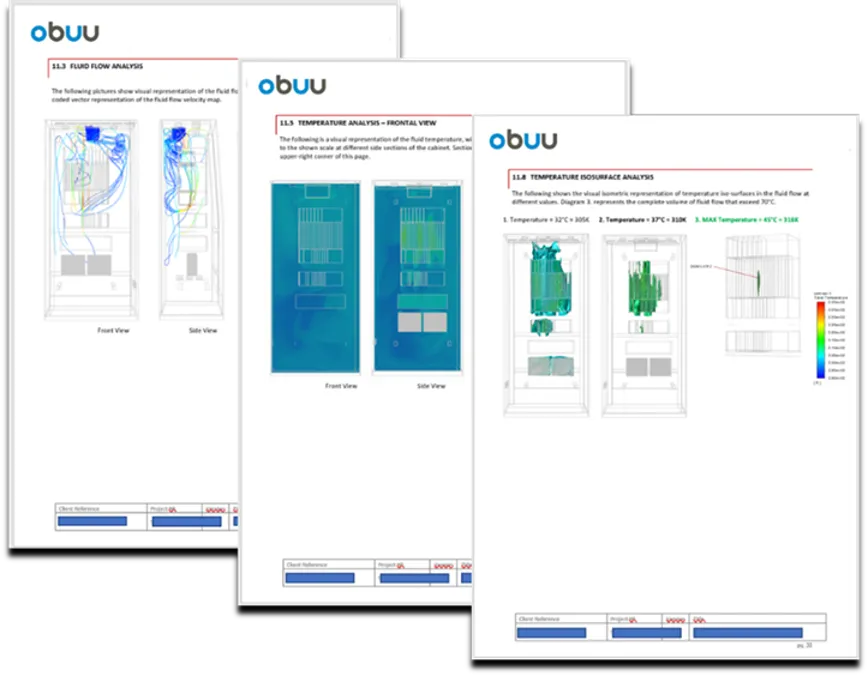
By combining these advanced simulation techniques, OBUU TECH delivers solutions that guarantee the structural integrity, thermal stability, and vibrational resilience of critical systems used in the most demanding environments.